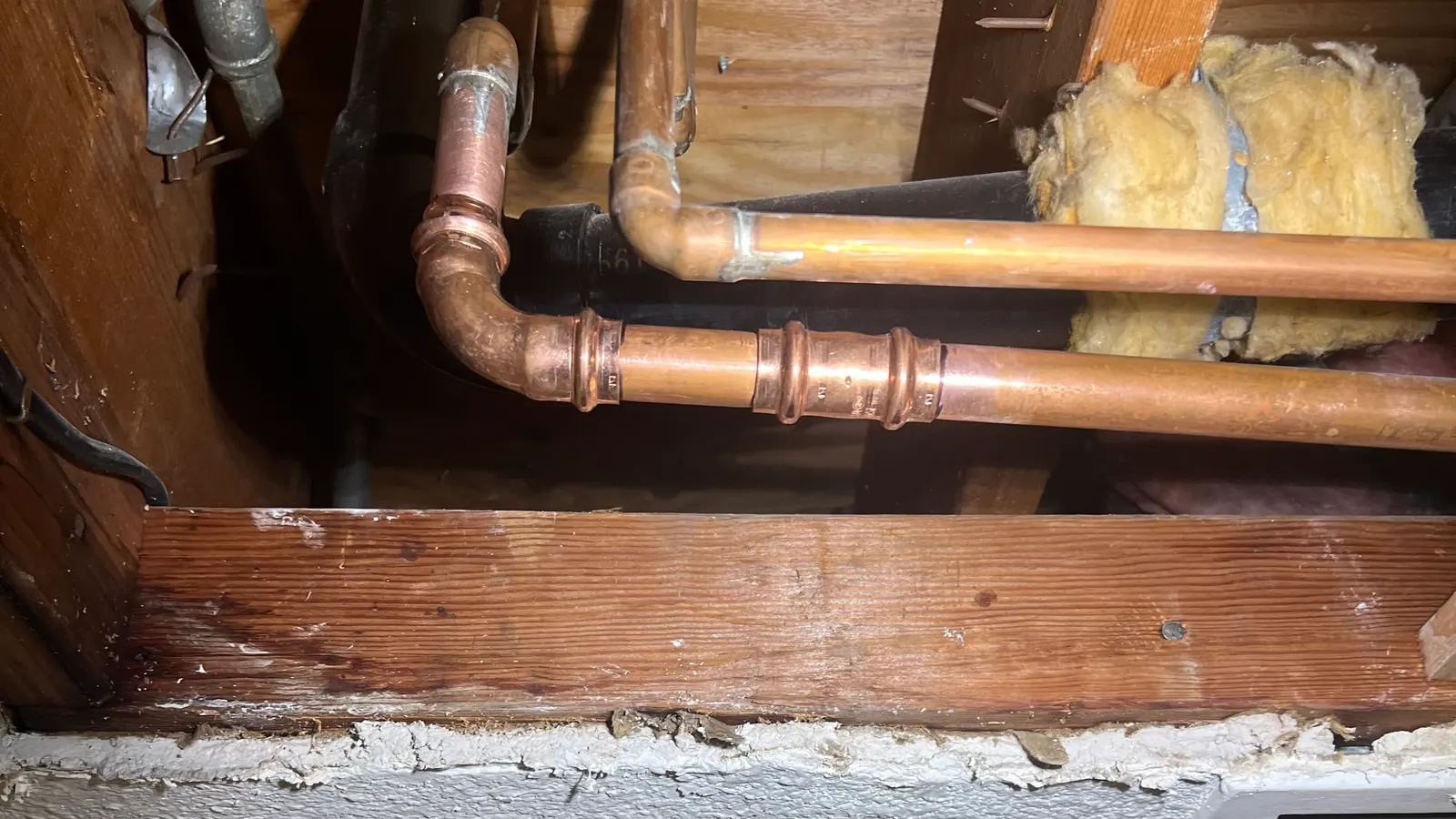
A burst pipe can put gallons of water a minute onto your floor. What you do before the plumber arrives matters more than anything the plumber does after.
Shut off the water first. Every home has a main shut-off valve — usually where the water line enters the house, often at the front hose bib, in the garage or in a box near the street. Turn it clockwise until it stops. If you've never looked for yours, find it today, before you need it.
Next, open a cold faucet at the lowest point in the house to drain what's left in the lines, and turn off the water heater. If water is anywhere near outlets, appliances or the electrical panel, switch off the power to that area at the breaker — and don't walk through standing water to do it.
Then deal with the water. Move furniture and rugs, mop or wet-vac what you can, and take photos of the damage and the pipe for your homeowner's insurance before you clean up too much.
Now call a plumber. Describe where the break is, what kind of pipe it is if you can tell (copper, galvanized steel or plastic), and whether the water is fully off. That tells us what to bring.
A burst is often a sign of a bigger pattern — corroded galvanized pipe, water pressure that's too high, or a line that has been rubbing against framing for years. We repair the break, then check the pressure and the condition of the surrounding pipe so the next one doesn't catch you the same way.
Alex's Plumbing and Rooter repairs burst and leaking pipes across San Jose and the South Bay. Call (408) 410-0028.