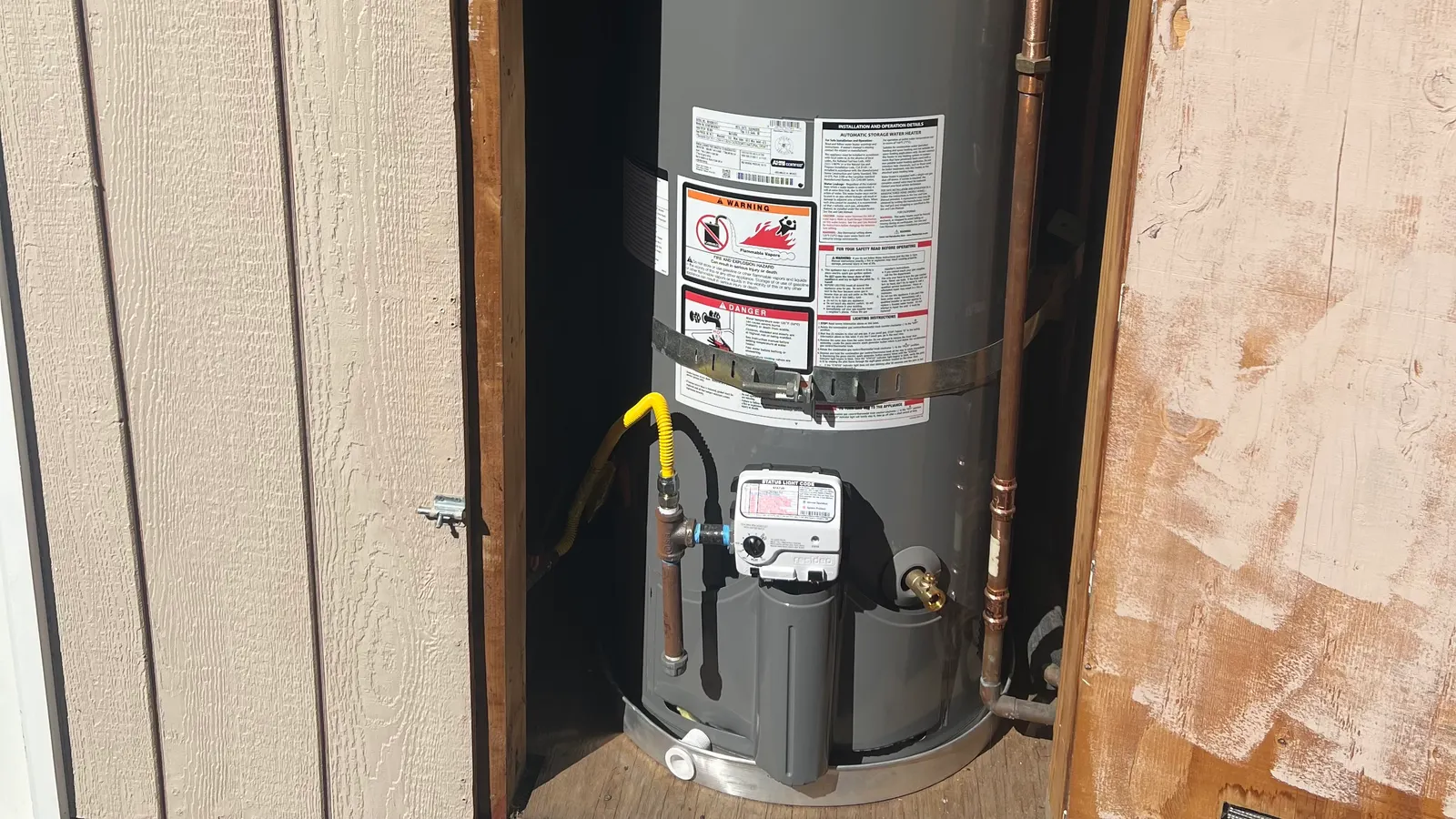
When the hot water stops, most people assume the worst. Often it's a part that costs far less than a new heater.
Start with the age. The first four digits of the serial number on the rating label usually give the month and year it was made. A tank water heater typically lasts around eight to twelve years; hard water shortens that.
Problems that are usually worth repairing: a pilot light that won't stay lit (often the thermocouple), no hot water on an electric unit (a heating element or thermostat), water that's too hot or not hot enough (thermostat or gas valve), and a dripping relief valve.
Signs the tank itself is finished: water pooling underneath that comes from the tank rather than a fitting, rusty hot water, or loud rumbling and popping from sediment that has hardened on the bottom. Once the steel tank leaks, it can't be patched.
If you replace it, the installation matters as much as the heater. In California a water heater has to be strapped against earthquakes, the relief valve needs a discharge pipe run to a safe place, gas units need correct venting and a sediment trap on the gas line, and many homes need an expansion tank. Skipping those is how a new heater fails inspection — or fails you.
It's also the moment to decide between tank and tankless. Tankless units cost more up front and may need a larger gas line, but they don't run out of hot water and they last longer. We'll tell you honestly whether your home is a good fit.
Alex's Plumbing and Rooter repairs and installs tank and tankless water heaters across the South Bay. Call (408) 410-0028 for a free estimate.